- Mon - Fri
7.30 AM – 5.30 PM
Other hours upon request - 770-487-1931

Pilates and Balance: Exercises to Improve Stability and Prevent Falls
By Tamara Newell
April 2026
As we age, balance can feel less steady, but this is not something you have to accept as a part of aging. Changes in muscle strength, joint mobility, and even the body’s internal sense of position can affect stability over time. The good news is that with intentional balance training, you can improve stability, move with greater confidence, and reduce your risk of falls. One of the most effective ways to do this is through Pilates for balance.
Why Balance Training Matters
Balance is more than just standing on one foot, it’s a complex system involving your muscles, joints, vision, and inner ear working together. As we get older, several natural changes can impact this system. Muscle mass tends to decrease through a process called sarcopenia, joint flexibility may decline, and reaction time can slow. These changes can increase the risk of falls, which are one of the leading causes of injury in older adults.
Fall prevention is so important. Improving balance doesn’t just protect your body; it supports your independence, confidence, and ability to enjoy daily life. Improving your stability can improve your confidence, stamina, and strength in daily activities like walking, bending, or climbing stairs.
How Pilates Improves Balance
Pilates for balance focuses on strengthening and stabilizing your core muscles around the spine and pelvis. These muscles, including the transverse abdominis, pelvic floor, and multifidus, act like a natural support system for your body. When they are strong and engaged, your movements become more controlled and efficient.
Pilates also enhances proprioception. Proprioception is your body’s awareness of where it is in space and a key component of coordination workouts, yet it often declines with age. Through slow, intentional movements, Pilates helps retrain your body and brain to communicate more effectively.
Another benefit of Pilates is its low-impact nature, which makes it both gentle and effective for building strength. This makes Pilates ideal for older adults who want to improve balance safely.
Top Pilates Exercises for Balance
You don’t need complicated routines to improve stability. Simple exercises at home are a great starting point for balance training:
1. Single-Leg Stand
Stand tall and gently lift one foot off the ground. Hold for a few seconds, then switch sides. Use a chair or wall for support if needed. This exercise strengthens the ankles and safely challenges your balance. Focus on engaging your core muscles and engaging correct foot alignment on the ground for balance.
2. Standing Leg Lifts
Hold onto a sturdy surface and stand with your legs parallel. Lift one leg to the front or side while keeping your posture upright. Lift and lower the leg 10x before switching to the other side. This targets the hips, which play a major role in stability.
3. Pilates March
Lie down on a mat with your knees bent and feet on the mat. Lift one foot while keeping the leg bent at a 90-degree angle. Keep your core engaged as you lift and lower your leg. Alternate marching the legs 10x each. This foundational movement builds coordination and core strength without straining the body.
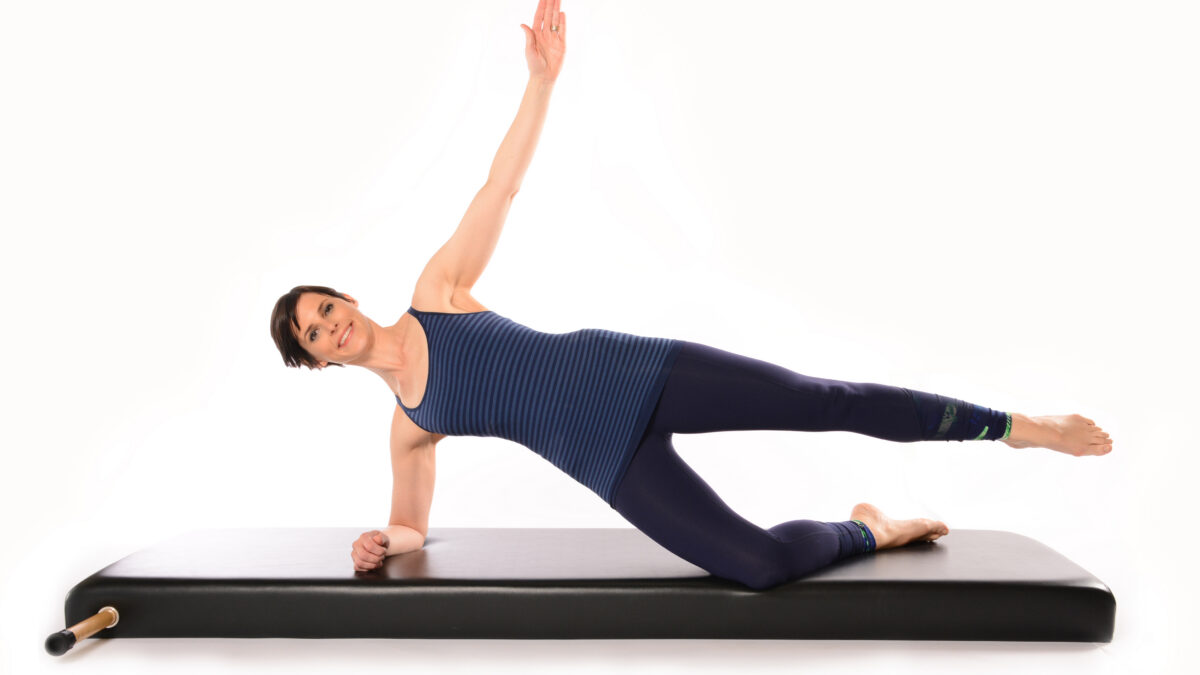
4. Side Leg Series
Lying on your side, legs parallel and zipped together. Keeping your core engaged, gently lift and lower your top leg with control. Only lift the leg as high as you can without rotating it out at the hip. This strengthens the smaller stabilizing muscles that support balance.
3 Tips for a Safe and Effective Pilates Practice
- Consistency matters more than intensity. Aim to practice these exercises a few times each week, focusing on slow, controlled movements.
- Use support when needed. Support is not a sign of weakness, but a smart way to build strength safely. Going barefoot or wearing supportive footwear can also help improve your connection to the ground.
- Listen to your body. Progress may feel slow at first, but each small step helps with fall prevention and long-term stability.
Improving your balance is one of the most meaningful ways to care for your body as you age. With regular Pilates for balance, you can strengthen your core foundation, enhance coordination, and move through your days with greater ease and confidence. You don’t have to do everything at once. Start small, stay consistent, and trust that your body can become stronger and more stable over time. ProHealth is ready to help you improve your balance at any age. Visit the studio in Peachtree City, GA today!